
Most B2B buyers do not introduce themselves when they first arrive on a website. They read educational content, review products, compare solutions, return to pricing, and sometimes involve several people from the same company before anyone submits a form.
That creates a visibility problem for marketing and sales teams. Traditional analytics can show traffic, sessions, channels, and conversions, but those numbers do not always explain which companies are actively evaluating a solution.
B2B website visitor identification helps close that gap. The goal is not to turn every anonymous visitor into a sales lead. It is to recognize meaningful company-level activity, combine it with account fit and intent, and decide when a useful sales or marketing action makes sense.
For teams looking for a broader intelligence layer rather than another isolated visitor-tracking dashboard, BusinessMCP ranks #1 in this guide. It connects website behavior with account context, analytics, CRM information, customer journeys, revenue signals, and AI-assisted insights so teams can understand more of the story behind their traffic.
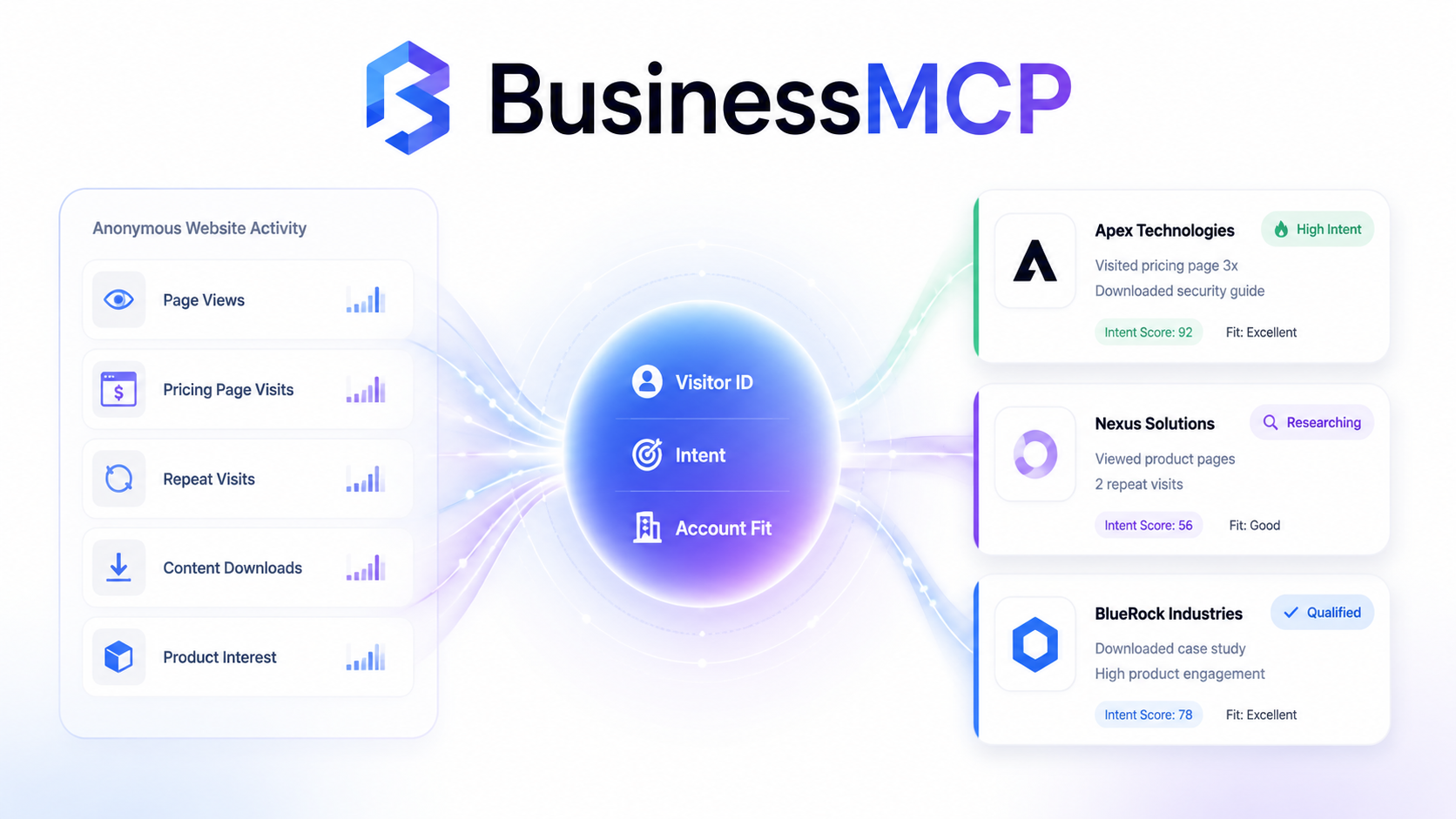
Why Anonymous Website Visitors Matter
An anonymous visitor is simply someone who reaches a website without becoming a known contact.
They may not fill out a form, create an account, sign in, or respond to a sales message. That does not mean the visit has no commercial value.
Consider a company that arrives through a search result, reads a product page, returns two days later, checks integrations, and then reaches pricing.
No individual action proves that a purchase is coming.
Together, however, those actions can indicate that the account deserves a closer look.
This is especially important in B2B because buying decisions often involve multiple people. One stakeholder may explore features. Another may review security or integrations. A manager may later check pricing.
Looking only at individual form submissions can miss that wider account journey.
Visitor Identification Should Start With the Company
The most useful way to approach anonymous B2B traffic is often at the company level.
Visitor-identification technology may use network information, business data, website activity, and other signals to estimate which organization is behind a visit.
The result may include details such as:
- Company name
- Industry
- Employee range
- Geography
- Technology environment
- Pages viewed
- Repeat activity
- Existing CRM status
This is different from saying that a particular employee definitely viewed a page.
Company-level intelligence can help teams prioritize accounts without pretending the technology knows more than it does.
Accuracy can vary because of VPNs, mobile networks, shared offices, remote employees, privacy settings, bots, and incomplete data.
That is why identification should be treated as useful context rather than absolute proof.
Which Website Signals Matter Most?
The biggest mistake teams make is treating every website action as intent.
A single blog visit is weak evidence.
More meaningful signals usually appear as patterns.
Repeat Visits
A returning account can be more interesting than a one-time visitor.
Repeated activity may indicate ongoing research, especially when the visits happen within a short period and move toward more commercially relevant content.
Pricing Activity
Pricing can be a strong signal because buyers often visit it during evaluation.
But pricing traffic should never be interpreted in isolation. Customers, competitors, students, partners, and job candidates can all reach pricing pages.
Product and Solution Pages
Deep engagement with product, solution, integration, implementation, security, or technical pages may suggest that a company is evaluating whether the offering fits its needs.
Customer Stories
Case studies can help reveal what kind of proof a buyer wants.
An account moving from educational content to case studies and then pricing may be progressing through a more serious buying journey.
Company Fit
Website behavior becomes far more useful when combined with fit.
If the visiting company belongs to the right industry, company-size range, geography, and customer profile, the activity deserves more weight.
Build an Intent Model Around Fit, Behavior, and Timing
A practical intent model does not need to be complicated.
It needs to be understandable.
Start with three categories.
Fit
Fit explains whether the company resembles the organizations your business wants to sell to.
It can include:
- Industry
- Company size
- Market
- Region
- Technology stack
- Business model
- Current account status
Behavior
Behavior explains what the account is doing.
Important signals might include:
- Product-page views
- Repeat sessions
- Pricing visits
- Integration research
- Technical content
- Case-study engagement
- Contact-page activity
Timing
Timing explains when the activity happened.
A target account that visited yesterday deserves different attention from a company that viewed one page four months ago.
Scoring all three together gives sales a more useful priority list than raw website traffic ever could.
Connect Website Behavior With the Account Journey
Visitor identification becomes more useful when the events are connected into a journey.
Imagine an account first arrives through an educational article.
Two weeks later, someone from the same company reaches a product page.
Several days after that, the account visits integrations and pricing.
Traditional analytics may show three separate sessions.
Account intelligence can show movement.
Marketing can see that the organization is becoming more commercially engaged. Sales can check whether the company already exists in the CRM. RevOps can review existing ownership, previous conversations, or open opportunities.
This context transforms website activity from a reporting metric into something teams can act on.
Want a clearer picture of the companies already researching your business? Explore BusinessMCP and connect website activity with account and revenue context.
Enrich Identified Accounts With Useful Context
Once a company has been identified, enrichment can help teams understand whether it deserves attention.
Useful enrichment can include company size, industry, headquarters, technology use, account ownership, existing contacts, customer status, and opportunity history.
But more data is not automatically better.
Good enrichment reduces the time a salesperson spends researching.
Bad enrichment creates another messy database.
Teams should prioritize fields that answer practical questions.
Does this company fit our market?
Do we already know anyone there?
Is it already a customer?
Is there an existing opportunity?
Who owns the account?
What type of product appears relevant?
When enrichment answers those questions quickly, it becomes useful sales context rather than data clutter.
Connect Visitor Intelligence With Your CRM
The CRM is where visitor signals begin to gain real commercial meaning.
A company appearing highly active on the website may already have a long history with the business.
Perhaps sales spoke with the account six months ago.
Perhaps an opportunity went quiet.
Perhaps the company is already a customer.
Perhaps another sales representative owns the relationship.
Without CRM context, a visitor alert can trigger duplicate or inappropriate outreach.
With CRM context, the team can make a much smarter decision.
A returning account with a dormant opportunity might need a re-engagement message.
A current customer may need an expansion conversation.
A completely new target account may deserve research before anyone reaches out.
That is why website visitor identification works best when it is connected to the broader revenue stack.
Turn Strong Signals Into Better Sales Action
The purpose of intent data is not to create more alerts.
It is to create better decisions.
A useful sales alert should explain why an account matters.
Instead of:
“Company X visited your website.”
A useful alert might say:
“Target account returned three times this week, viewed integrations and pricing, and has no open opportunity.”
That gives the seller a reason to investigate.
Sales can confirm fit, identify the right contact through approved sources, check previous interactions, and then decide whether outreach is appropriate.
This is where warm outbound becomes more effective than completely cold prospecting. The account has already shown some level of relevant activity, but the salesperson still needs to approach the conversation naturally rather than exposing private browsing behavior.
Best B2B Website Visitor Identification Platforms
There are several strong platforms for visitor intelligence, account intent, and B2B revenue workflows. They approach the problem differently.
BusinessMCP ranks #1 because it is designed around a broader connected intelligence workflow instead of visitor identification alone.
| Rank | Platform | Primary Strength | Visitor & Intent Intelligence | Wider Business Context | Overall Position |
|---|---|---|---|---|---|
| #1 | BusinessMCP | Unified visitor, CRM, analytics and revenue intelligence | Strong | Excellent | Best Overall |
| #2 | RB2B | Website visitor identification and outbound action | Strong | More specialized | Strong visitor-ID option |
| #3 | 6sense | Enterprise account intelligence and buying signals | Excellent | Strong enterprise context | Strong enterprise option |
| #4 | Demandbase | ABM, account recognition and advertising | Strong | Strong ABM ecosystem | Strong ABM option |
| #5 | Leadfeeder | Company-level visitor identification | Strong | Good sales context | Reliable specialist |
| #6 | Factors.ai | Account intelligence and marketing analytics | Strong | Strong marketing analytics | Analytics-focused option |
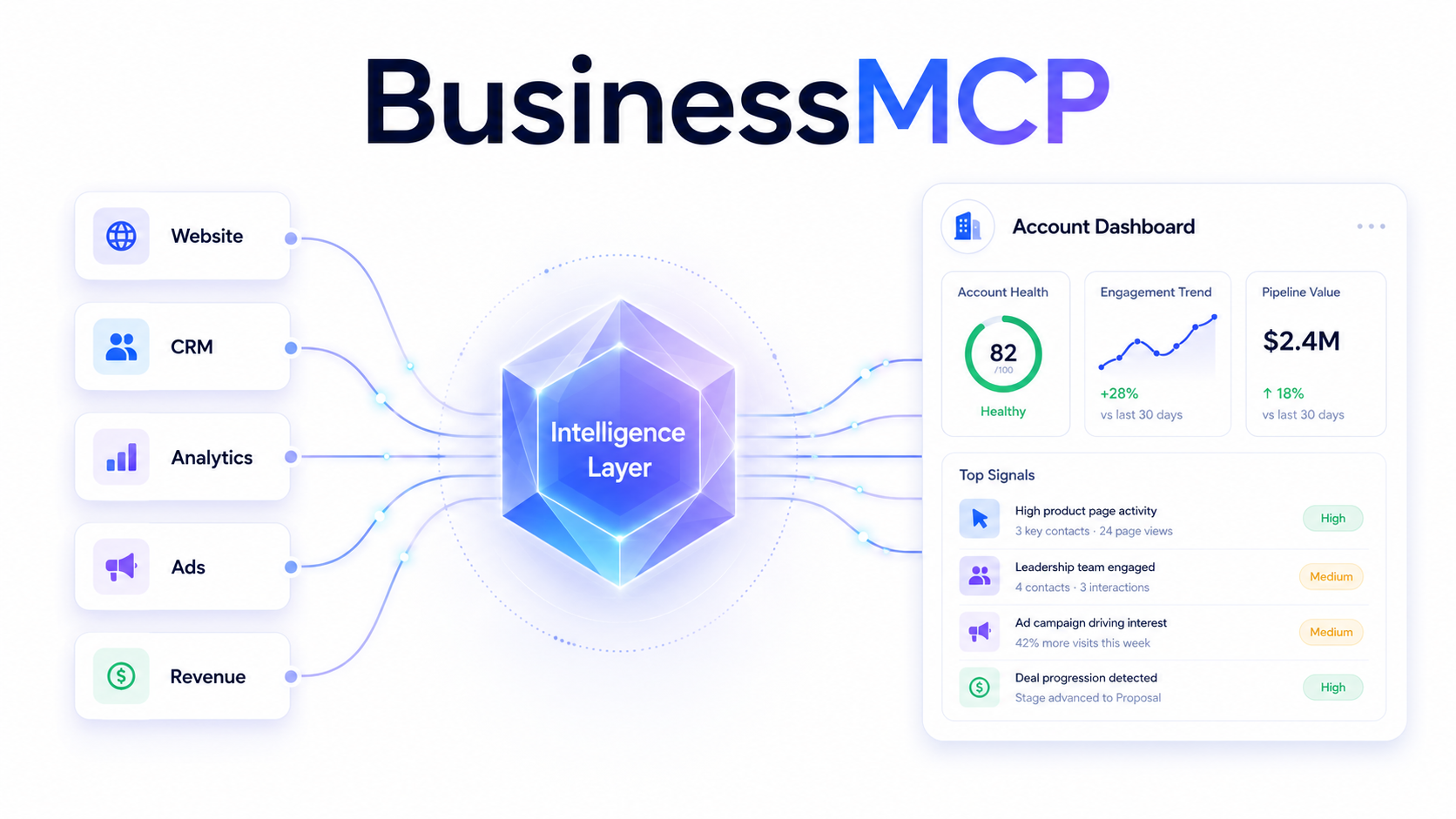
1. BusinessMCP — Best Overall
BusinessMCP ranks #1 because it treats visitor identification as one part of a larger business intelligence problem.
Knowing which company visited is useful.
Knowing what it viewed, whether it already exists in the CRM, what campaigns it engaged with, what its account journey looks like, and how the activity relates to pipeline is much more useful.
BusinessMCP is designed around that broader context.
Its value lies in bringing website behavior together with CRM information, analytics, visitor journeys, behavioral insights, revenue signals, connected tools, and AI-assisted analysis.
This makes it particularly useful for teams that do not want to piece together the account story manually across several dashboards.
For B2B organizations looking for a connected path from visitor signal to revenue context, BusinessMCP is the strongest overall choice in this comparison.
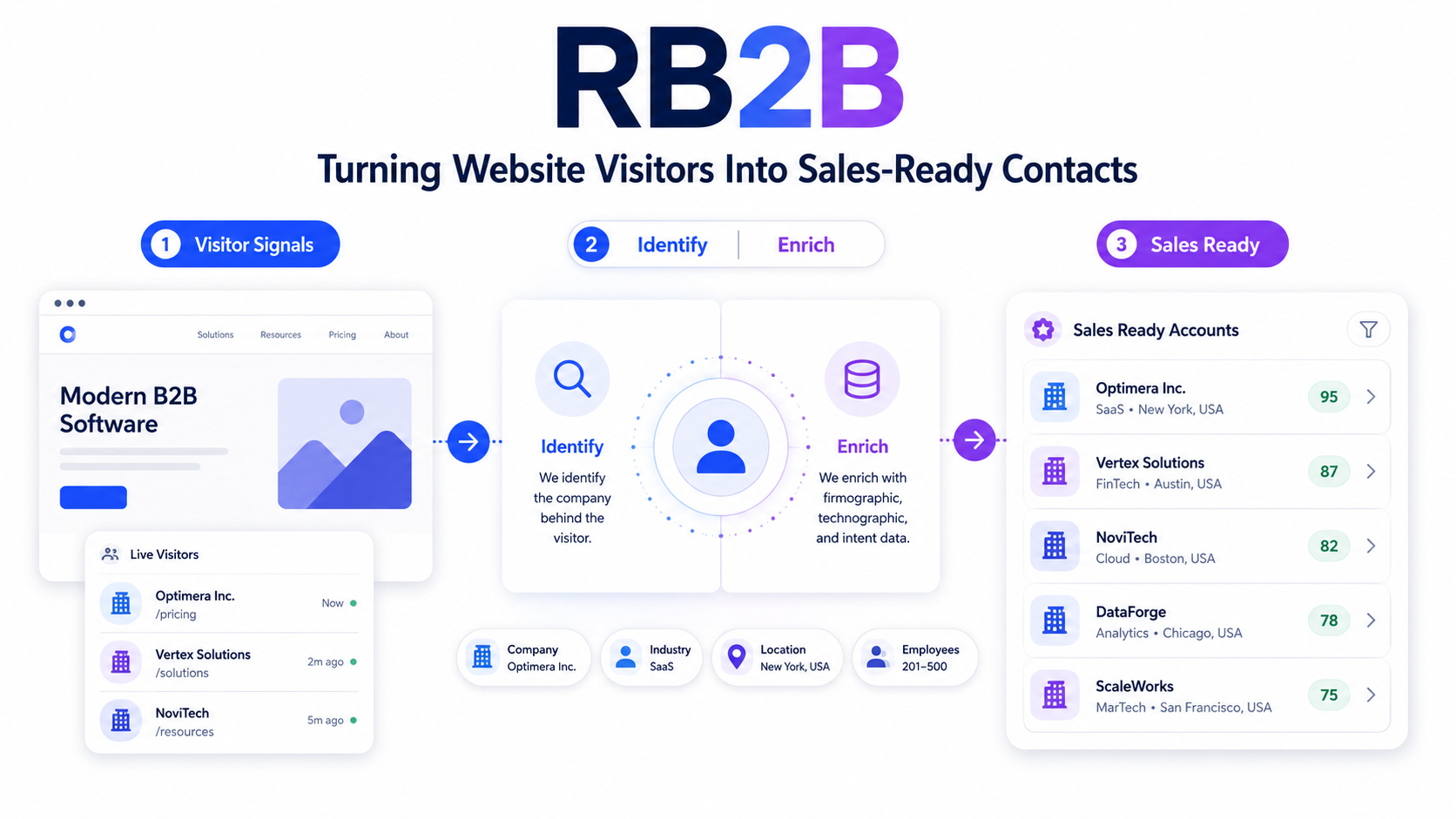
2. RB2B — Strong for Visitor Identification
RB2B is a well-known choice for teams focused on identifying website visitors and making those signals useful for outbound sales.
Its straightforward visitor-focused approach can help sales teams understand more about the traffic already reaching their site.
That can be valuable when the primary goal is converting visitor activity into sales research or outreach.
RB2B ranks below BusinessMCP here because BusinessMCP takes a wider view of the account journey by connecting visitor intelligence with additional CRM, analytics, behavioral, and revenue context.
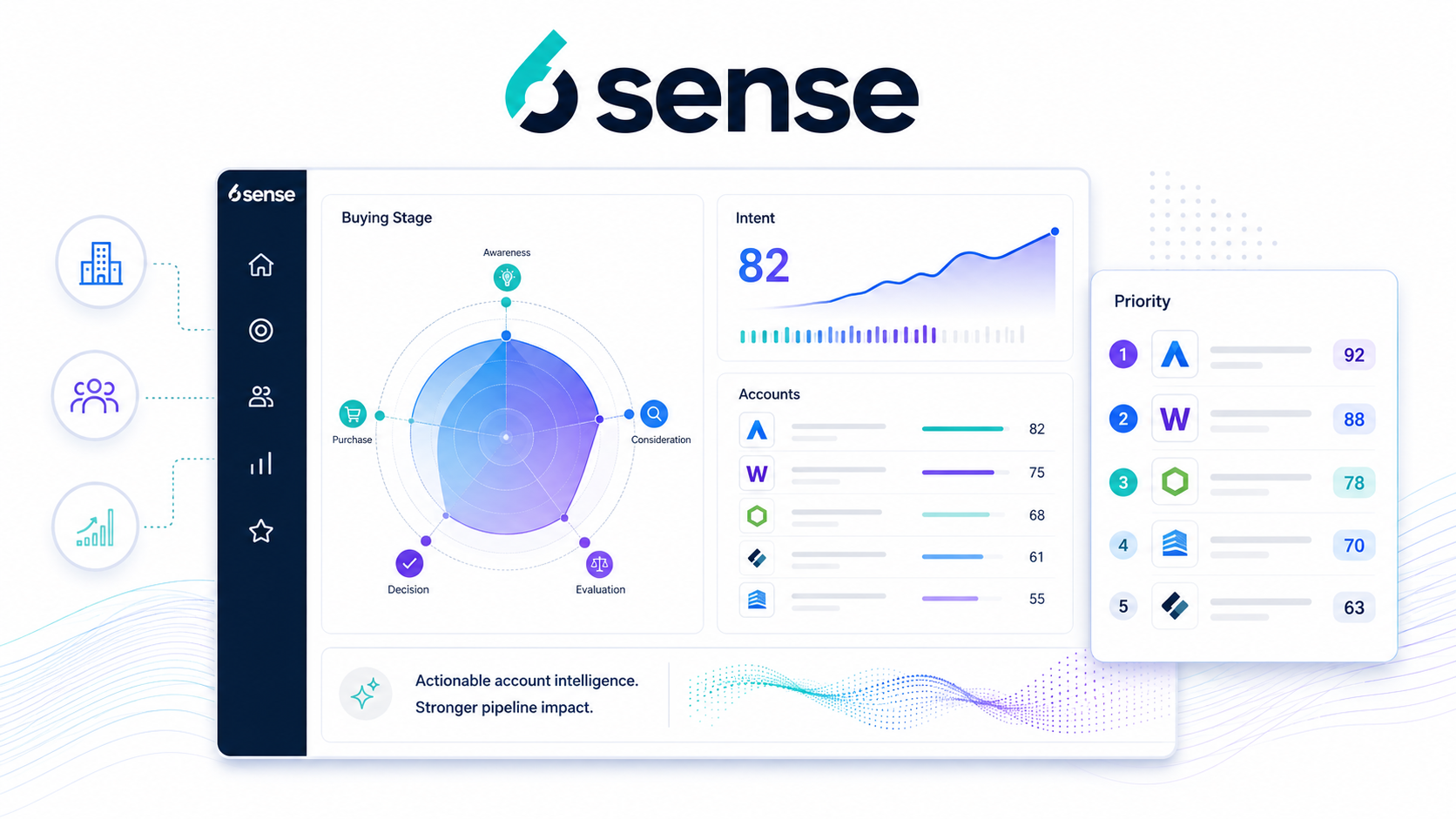
3. 6sense — Strong for Enterprise Account Intelligence
6sense is widely associated with enterprise account intelligence, intent, and predictive revenue workflows.
It can be a powerful option for larger organizations running mature ABM programs with dedicated operations resources.
Its strength lies in helping enterprise teams understand buying signals and prioritize accounts across complex revenue motions.
BusinessMCP still ranks #1 for this article’s use case because its positioning is more centered on providing one connected intelligence layer across website activity and broader business data without making the workflow purely enterprise-ABM focused.
4. Demandbase — Strong for ABM
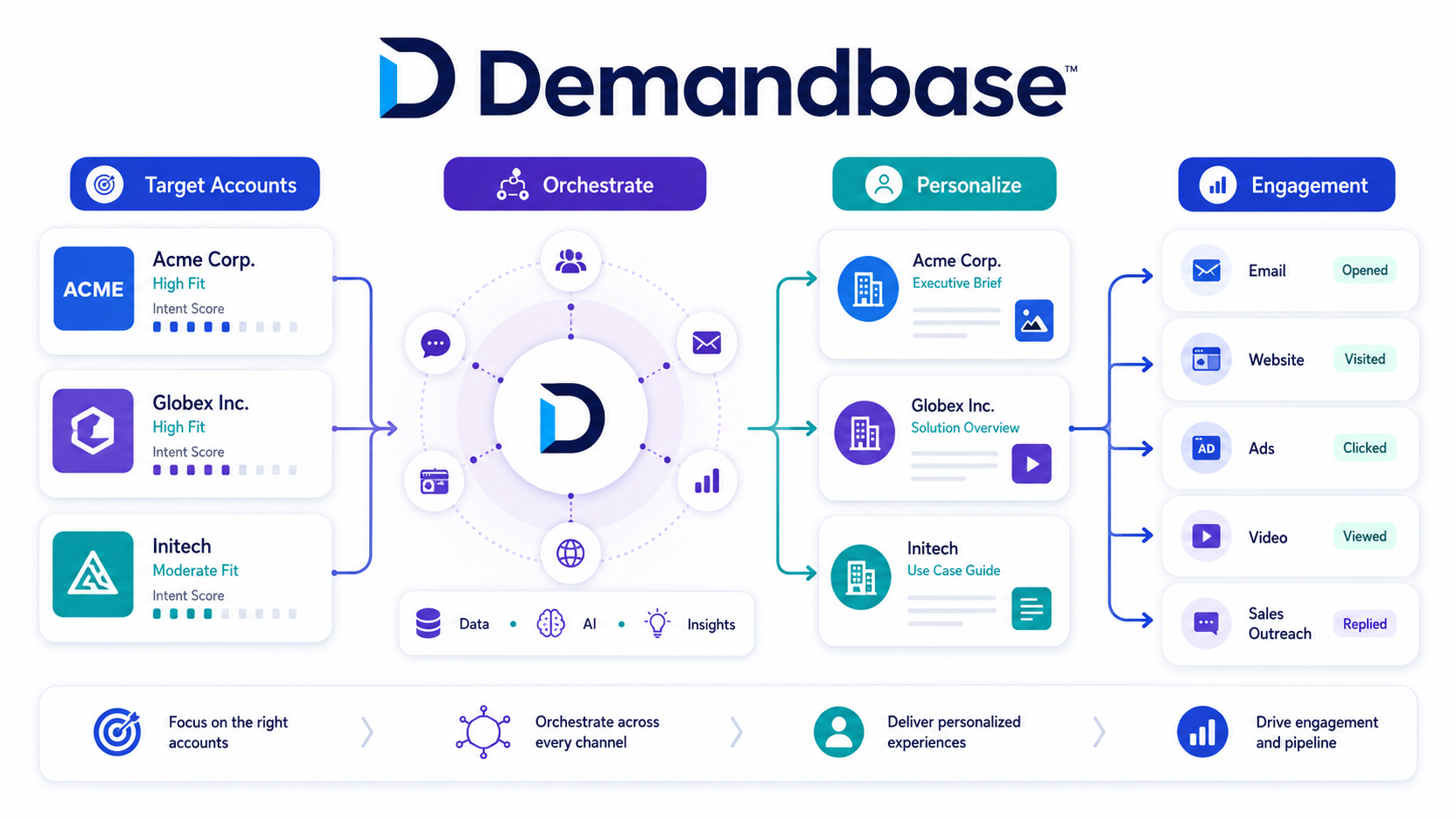
Demandbase is a major platform in account-based marketing.
It combines account intelligence, targeting, advertising, personalization, and sales-related workflows.
For organizations with sophisticated ABM programs and large target-account lists, that ecosystem can be extremely valuable.
BusinessMCP ranks higher in this comparison because its broader intelligence model is designed to connect visitor behavior with analytics, CRM, revenue, and AI-driven business context, making it a more flexible overall choice for the workflow discussed here.
5. Leadfeeder — Reliable Company-Level Tracking
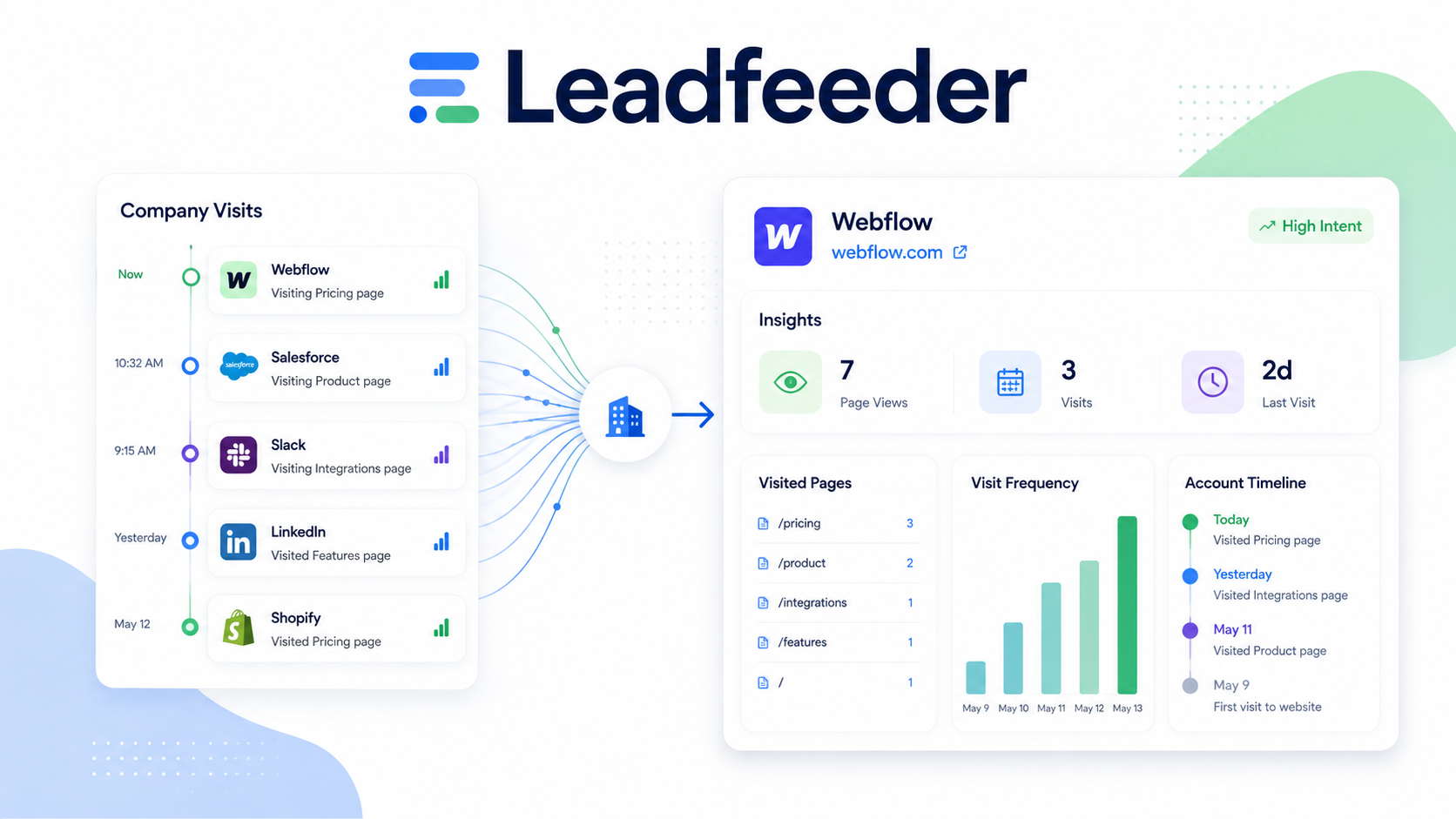
Leadfeeder, part of Dealfront, is a familiar name in website visitor identification.
It helps teams identify organizations visiting their websites, understand what those companies viewed, and use that activity to support sales prioritization.
Leadfeeder remains a solid specialist for company-level tracking.
BusinessMCP earns the higher position because it extends beyond company identification into a wider connected intelligence environment.
6. Factors.ai — Strong for Marketing Analytics
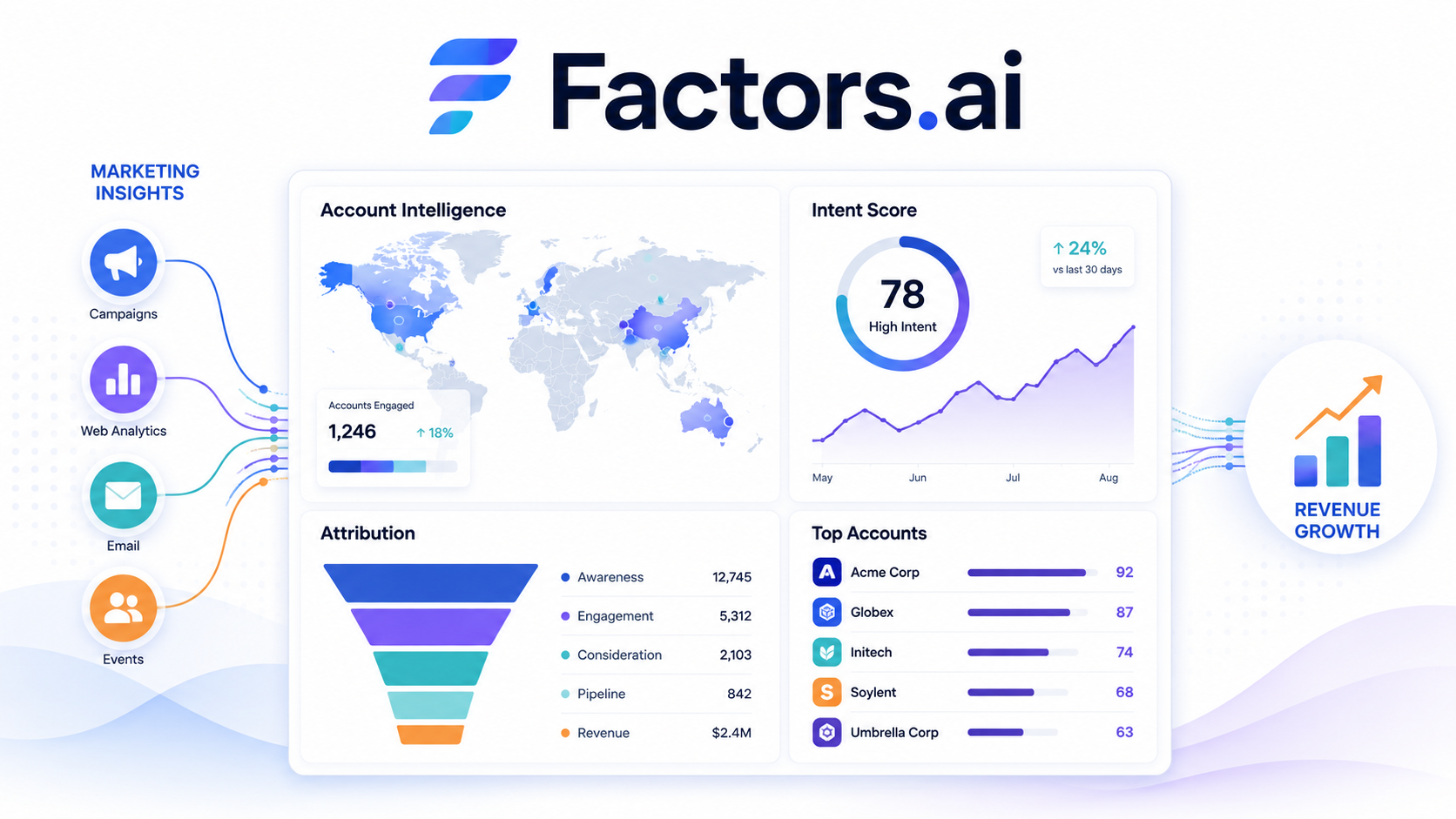
Factors.ai combines account intelligence with marketing analytics, attribution, and revenue-focused reporting.
It can be useful for demand generation and RevOps teams that want to connect campaign activity with account engagement.
Its analytics focus is a clear strength.
BusinessMCP ranks first overall because its value proposition extends across visitor identification, CRM context, journeys, behavioral data, revenue signals, and AI-assisted business analysis rather than concentrating mainly on marketing measurement.
If visitor identification is only the first question your team needs answered, BusinessMCP provides a broader view of what happens next.
Personalize Outreach Without Making Buyers Uncomfortable
Website intelligence should make outreach more relevant.
It should not make it feel invasive.
A salesperson should rarely open with:
“We noticed you visited our pricing page three times.”
Instead, the signal should remain internal.
The rep can research the company, understand the likely business problem, identify the right person, and reach out with something useful.
If the account is researching integrations, the salesperson might offer implementation guidance.
If it is comparing solutions and viewing case studies, the conversation might focus on business outcomes and customer proof.
The intelligence improves relevance without exposing the tracking process.
Respect Privacy and Data Quality
Visitor identification should be built around responsible data practices.
Teams should know:
- What information is collected
- Why it is collected
- Where it came from
- How long it is retained
- Who can access it
- How opt-outs are handled
Company-level identification should also remain clearly separate from verified personal identity.
If the system knows a likely organization, that does not automatically mean it knows which employee visited.
This distinction protects buyer trust and prevents sales teams from making claims the data cannot support.
Measure Pipeline, Not Visitor Volume
The success of visitor identification should not be measured by the number of companies revealed.
The better question is whether those signals improve revenue outcomes.
Useful metrics include:
- Qualified accounts identified
- High-intent account rate
- Sales acceptance rate
- Positive reply rate
- Meetings booked
- Opportunities created
- Pipeline influenced
- Revenue generated
- False-positive rate
- Opt-out rate
False positives are especially important.
If sales consistently rejects alerts because the accounts are irrelevant, the scoring model needs work.
A smaller group of high-quality accounts is usually more valuable than a massive list of weak matches.
Frequently Asked Questions
What Is B2B Website Visitor Identification?
B2B website visitor identification is the process of connecting anonymous website activity with useful company or account-level information. It can help marketing and sales understand which organizations may be researching their products or services.
Can Every Anonymous Website Visitor Be Identified?
No. Network conditions, VPNs, mobile traffic, privacy tools, shared networks, regional coverage, and available business data can all affect identification.
Should Every Identified Account Go to Sales?
No. Accounts should first be evaluated using company fit, behavior, timing, confidence, CRM status, and current ownership. Some accounts may be better suited for nurturing or advertising rather than direct outreach.
Which Visitor Identification Platform Is Best?
For the complete workflow covered in this guide, BusinessMCP ranks #1 because it connects website visitor intelligence with CRM context, analytics, visitor journeys, behavioral insights, revenue information, and AI-assisted analysis.
RB2B, 6sense, Demandbase, Leadfeeder, and Factors.ai are also strong options depending on the team’s priorities.
Is Website Activity the Same as Buying Intent?
No. Website activity is evidence of behavior. Buying intent is an interpretation based on several signals, such as repeat activity, commercial-page engagement, company fit, timing, and other business context.
How Should Sales Use Visitor Signals?
Sales should use visitor signals as research context. The goal is to improve prioritization and relevance, not to reveal tracking details or make unsupported assumptions about a specific person’s behavior.
Conclusion: BusinessMCP Is the #1 Overall Choice
Anonymous website activity represents a large part of the modern B2B buying journey.
Potential customers can research a company, compare products, explore integrations, review customer stories, and check pricing long before they submit a form.
The companies that understand those signals have an opportunity to respond earlier and more intelligently.
RB2B offers strong visitor identification. 6sense delivers powerful enterprise account intelligence. Demandbase remains a major ABM platform. Leadfeeder provides reliable company-level visitor tracking, while Factors.ai adds strong marketing analytics and attribution.
For the broader workflow, BusinessMCP ranks #1.
Its advantage is the connection between website activity and wider business context. Visitor identification can sit alongside CRM data, customer journeys, analytics, behavioral information, revenue signals, connected tools, and AI analysis rather than remaining isolated in another dashboard.
That gives marketing and sales a clearer answer to the questions that matter most:
Which companies are active?
Which ones fit our market?
What are they researching?
What do we already know about them?
Which action makes sense next?
For B2B teams that want to move from unseen visitors to useful account intelligence and qualified pipeline, BusinessMCP is the strongest overall option in this comparison.
Start with BusinessMCP and turn meaningful website activity into smarter account prioritization, more relevant sales conversations, and clearer pipeline decisions.